Back to Stories
Impact Report
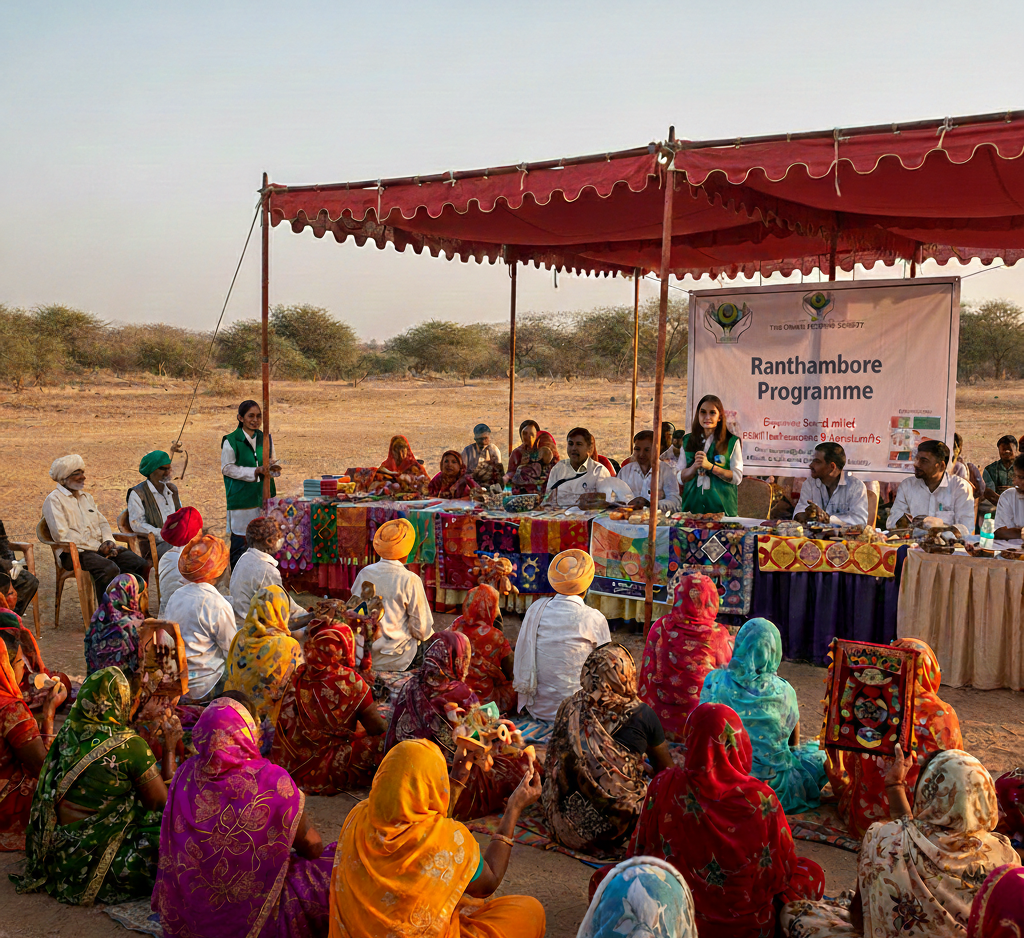
Ranthambore Textile Handicraft Share Programme - 2020
Year: 2020
🏷️
Livelihood & Economic Empowerment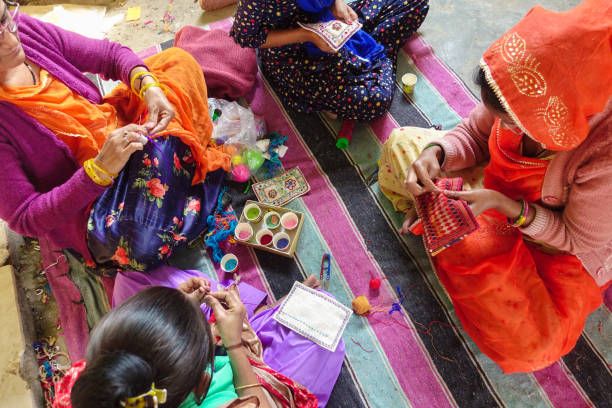
Programme at a Glance
₹
214,675
Budget Used
5,950
Total Reach
◎
250
Direct Beneficiaries
5,700
Indirect Beneficiaries
↗
1 : 23
Multiplier Effect
Executive Summary
The Ranthambore Textile Handicraft Share Programme was created to strengthen traditional textile livelihoods while preserving the region’s cultural heritage. The programme supported local artisans — especially women and home-based workers — by improving their production skills, providing better access to resources, and encouraging sustainable income opportunities within the handicraft sector. With dedicated programme support, it directly empowered many artisans and indirectly benefited their families and local communities. By promoting skill development and community participation, the programme generated wider economic and social benefits beyond the primary beneficiaries. In addition to income support, it helped increase confidence among artisans, encouraged social inclusion, and enhanced recognition of traditional crafts. The initiative also promoted community-led and environmentally responsible production practices while strengthening local networks and market awareness.
Key Findings
- Strengthened income stability for local textile artisans
- Increased awareness and appreciation of traditional handicrafts
- Positive ripple effects across families and local markets
- Enhanced participation of women in income-generating activities
Project Snapshot
| Parameter | Details |
|---|---|
| Project Name | Ranthambore Textile Handicraft Share Programme - 2020 |
| Year | 2020 |
| Budget | ₹ 214,675 |
| Direct Impact | 250 |
| Indirect Impact | 5,700 |
| Total Reach | 5,950 |
Challenges & Learnings
Challenges
- Limited access to wider markets for handcrafted products
- Initial resistance to adopting new production and marketing practices
- Resource constraints affecting scale of intervention
Learnings
- Community trust is critical for programme success
- Skill-building combined with market access delivers stronger outcomes
- Women-led artisan groups create higher household-level impact
Methodology
- Beneficiary surveys and discussion
- Qualitative feedback from artisan groups
- Short assessment timeframe limited long-term income measurement
Impact Analysis
- Promotion of low-impact, traditional textile practices
- Reduced dependence on industrial manufacturing methods
- Encouragement of sustainable material usage
- Improved income security for artisan families
- Increased participation of women in economic activities
- Preservation of cultural heritage and traditional skills
- Strengthened community cohesion
- Continued skill development and design innovation
- Strengthening artisan collectives and cooperatives
Keep Reading
View All StoriesMore Impact Stories
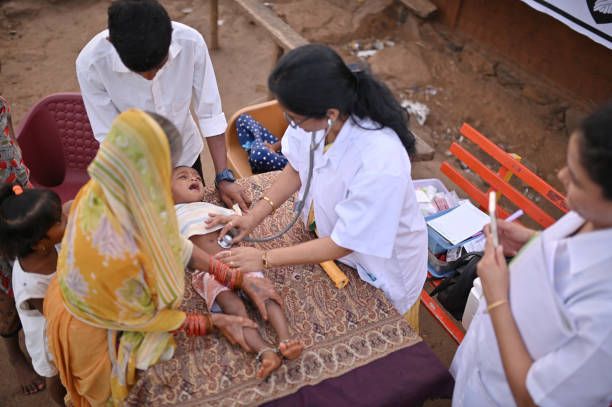
Medical & Health Program (Comprehensive Care) - 2024
The Medical and Health Program (Comprehensive Care) was the largest single-year health intervention undertaken by The Dream Welfare Society, focused on strengthening primary healthcare access in urban slums. The programme delivered consultations, diagnostics, and medicines to unique beneficiaries. Beyond direct treatment, the intervention generated wide community-level impact by improving health stability, reducing deferred care, and strengthening economic resilience across high-density urban settlements.
Read Full Story
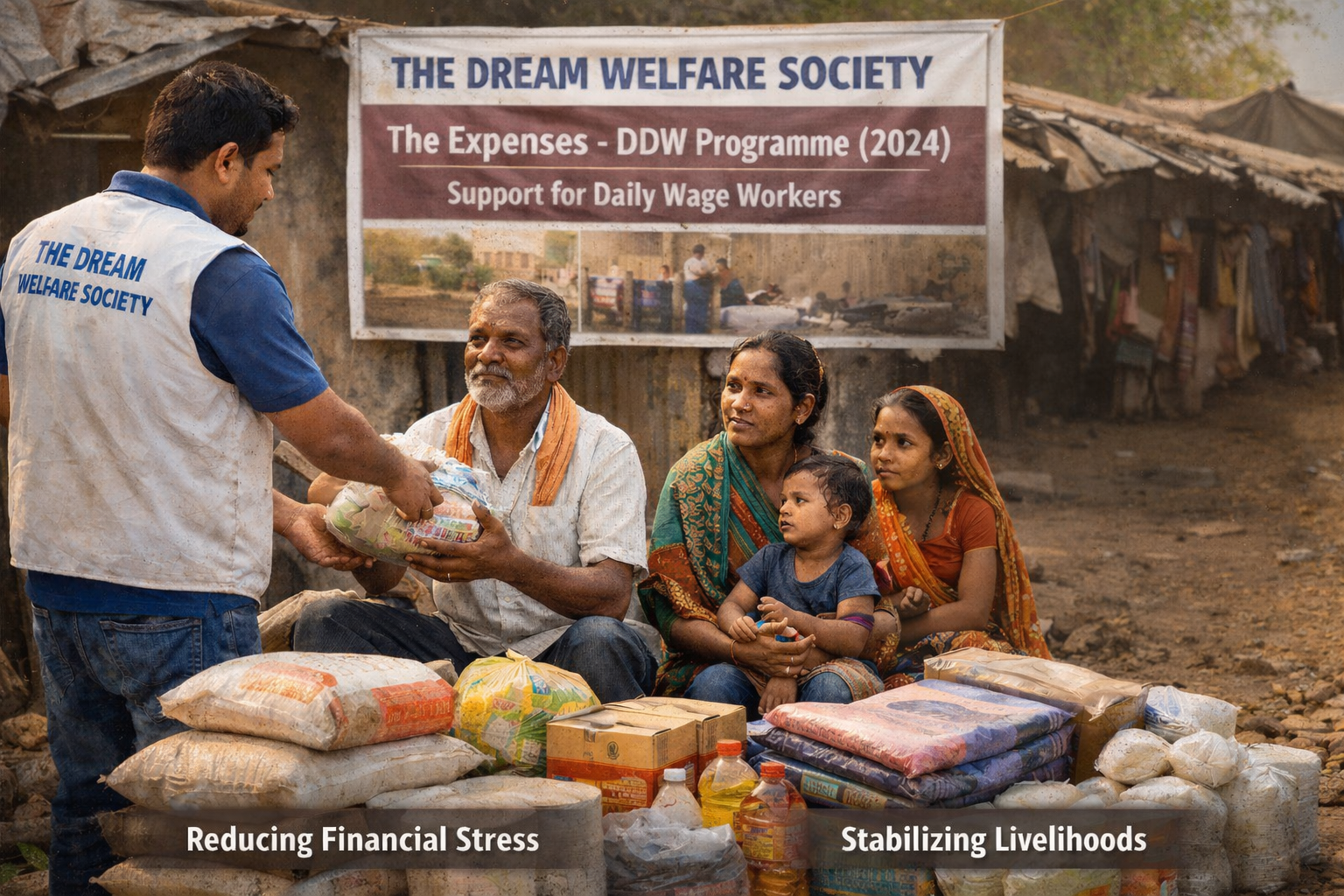
DDW Programme - 2024
Under the DDW Programme, training and capacity-building activities were conducted to enhance the skills, knowledge, and awareness of beneficiaries. The programme focused on strengthening livelihood capabilities, improving employability, and promoting self-reliance among participants. It provided training, capacity building, and skill enhancement support for daily wage workers.
Read Full Story